
June, 2019
By Mary Ann Doyle
Wild Instincts Gearing for Busy Spring
It’s spring in the Northwoods and that means babies of every species are being born. For Mark Naniot and his wife Sharon Larson, these next few weeks will prove the busiest time of year at Wild Instincts, their wildlife rehabilitation facility in Newbold.
A fawn with a fractured leg; an eagle convulsing from lead poisoning; a starving bear cub; an owlet thrown from its nest, are all in a day’s work for this couple and a staff of interns. These creatures represent a small sample of what comes through their door every day.

A licensed wildlife rehabber for close to 30 years, Mark built Wild Instincts with determined grit in 2011 on a piece of wooded property just off Hwy. 47 in Newbold. In the eight years since, the couple has carved out a facility that can care for wild animals of every species. And it has grown tremendously.
The first spring they treated over 300 animals. Last year they cared for 927 wild creatures that included 115 species of mammals, reptiles and birds.
“In the next few weeks we could see 10 or more patients a day come in,” said Mark. “From hummingbirds to eagles, fawns, cubs, bunnies, squirrels, raccoons, otters, turtles, we take them all in.”
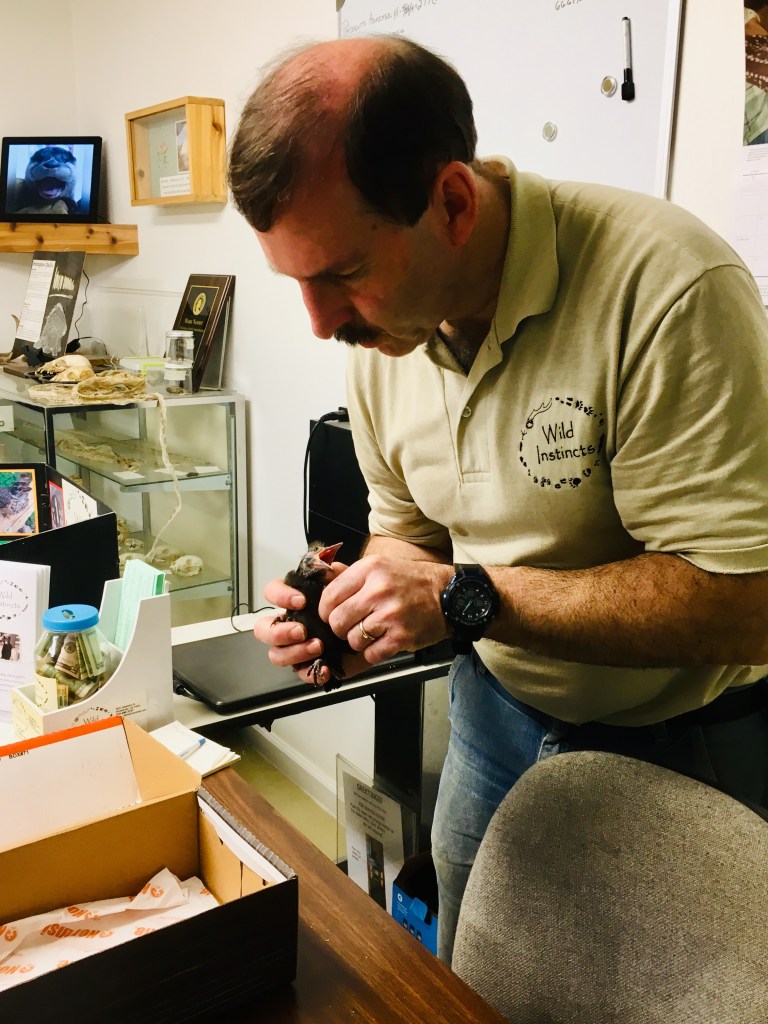
So far this spring in addition to baby raccoons, squirrels, rabbits, and a number of songbirds, nine fawns and three bear cubs have recently come under Mark’s care and he expects those numbers to rise before long. The Northwoods has experienced very harsh winters in the last few years and it’s showing in the condition of the creatures arriving at Wild Instincts.
“The fawns and bear cubs are emancipated, small and weak,” he said. “These last two winters were really hard on the mothers and it shows in the condition of their young.”
The unrelenting cold spring weather has also been a factor.
“Late springs are hard on wildlife,” he said. “Insects don’t hatch which means less food for many migrating birds coming back to nest. Vegetation is late in blooming which is cover for a lot of nesting birds making them more vulnerable to predators. Cubs and fawns that are already weak and small come out to harsh weather and get left behind while the mother forages for food. I believe this is due to climate change and it’s reflected in the condition of the wildlife we are seeing.”
Expensive to care for wild creatures
Care for these animals is expensive. Fawns require a special formula and it can cost up to $2,000 for each baby until they can be released in early September. While most of the animals at the facility need help, it can be frustrating when a baby is brought in needlessly. In many instances that’s the case with fawns.
Mother deer use a survival instinct to leave their newly born for long periods and this presents a problem for well-meaning folks thinking a fawn has been abandoned.

“There are instances when fawns need help but in many cases they should be left alone,” said Mark. “Always, always call us first for advice. A mother deer is best for the fawn and interfering with this natural behavior can be disastrous for a baby.”
Lead poisoning devastating to birds
Another heart wrenching and costly scenario is the impact lead ammunition and fishing bait is having on the area birds particularly eagles, hawks, loons and vultures. They all feed on carrion or fish and many times these diets are riddled with lead bullets, pellets and lures.
Birds are very vulnerable to lead poisoning. A pellet smaller than a BB can cause toxicity levels off the charts. Treating these magnificent creatures is time consuming, expensive and in some instances hopeless in the end. And recently all of the eagles coming to Wild Instincts have had lead poisoning.


“We are rehabbing an eagle we call Christmas,” said Mark. “On Christmas Day last year, in the middle of the night, twenty below zero, a snowmobile groomer found the bird on a trail convulsing. We have been rehabbing the bird since that day but her outlook is still not promising.”
Mark has obtained a special instrument that can measure the lead toxicity in a bird’s system. In the past blood samples had to be sent to Marshfield Clinic for analysis which resulted in a waiting period for treatment. With this technology at hand Mark can detect a bird’s toxicity level in minutes and start the detoxing process immediately but despite this, lead poisoning has some devastating lasting impacts.
“The treatment is harsh in itself,” said Mark. “We can’t measure the damage done to organs and their bones when these birds suffer with lead poisoning and then the impact of the treatment on their systems.”
One of the more insidious impacts of this poisoning is brain damage which can render birds incapable of surviving in the wild.
“It costs thousands of dollars to treat an eagle with lead poisoning and in the end some don’t recover enough to fend for themselves because of irreversible brain damage,” Mark said. “They can’t be released. So what to we do? Our hands our tied. Zoos don’t want these animals.”
Mark stresses that Wild Instincts is a rehab facility, its purpose to care for animals until their release, and then hopeful survival. He works hard at this, making sure fawns don’t become attached to their human caregivers, and the bear cubs and other creatures, while well fed and cared for, are placed in spacious, but secluded pens until they have recovered enough to be returned to the wild.
Over the years Mark and Sharon, with help from many volunteers, have built individual enclosures on this wooded land, specific enough to meet the needs of songbirds, raptors, squirrels, otters, bears, badgers, raccoons and even bats. They are all tucked into the vegetation, some even completely covered so patients stay calm and have as little interaction with humans as possible. Their survival depends on it.
And while these next months will be hectic, the work doesn’t stop when the days shorten. When Fall comes many patients will be ready to fend for themselves and be released, but some will not.

Most of the enclosures for recovering wildlife have been built in the woods to create a wild habitat while animals recover. 
This flight cage allows birds to stretch their wings as they recover. 
The bird on the left is the surrogate parent to these two orphaned owlets. The parent bird was injured and cannot be released so it is used to teach owl behavior to these babies. 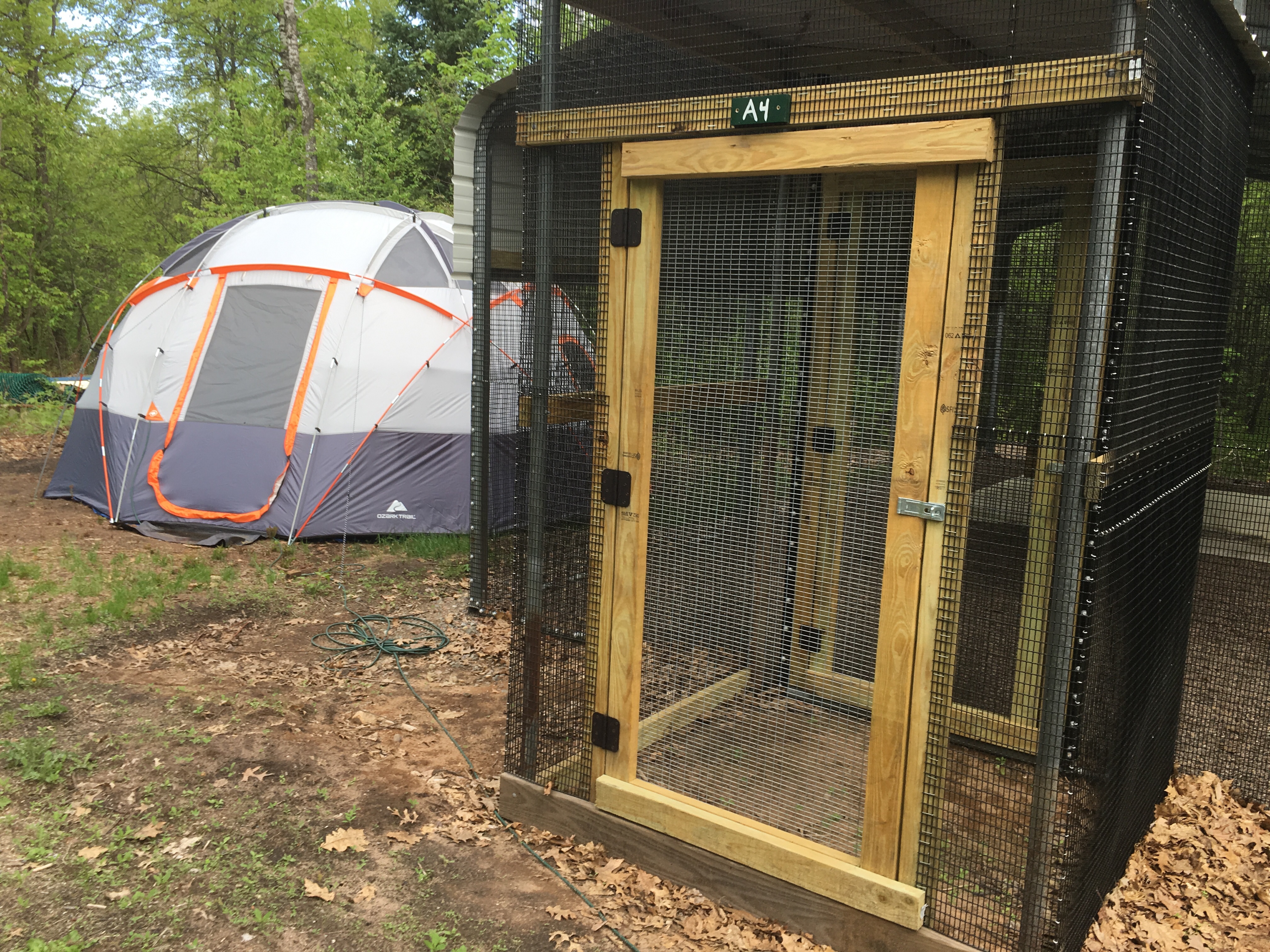
The tent in the background is used as a flight area for bats. 
Many of the enclosures are covered to create less stress for recovering animals. 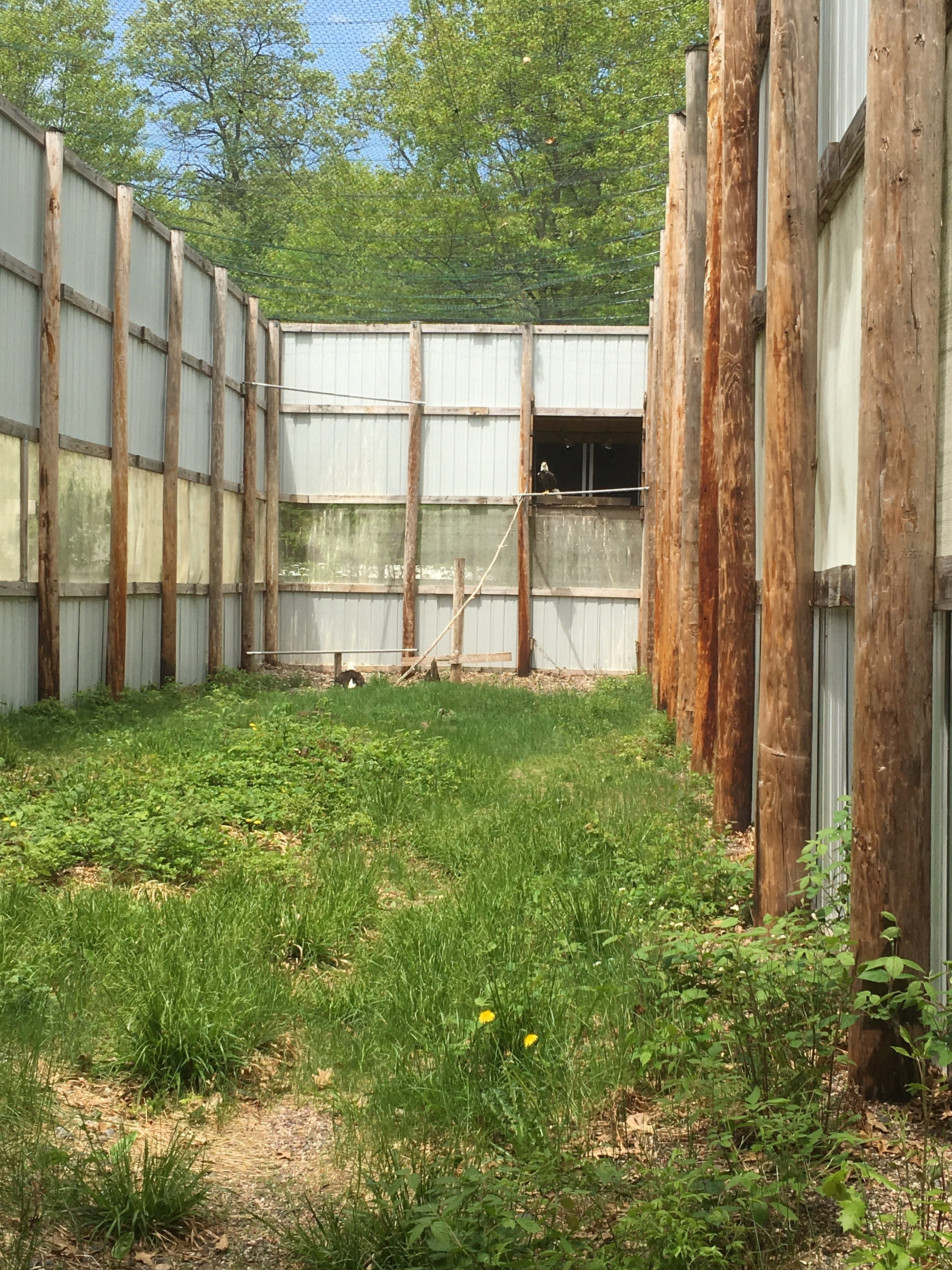
All of the enclosures Mark and volunteers have constructed far exceed the required footage by state and federal regulations. Two eagles are recovering from lead poisoning in this enclosure.
Care continues in winter months
Last year more than 30 animals over wintered at Wild Instincts, including a family of bats. Injured turtles, babies born late in the year, poisoned birds all need care through the winter months.
In addition, Wild Instincts is a permanent home to residents such as Ruby the red tailed hawk; Amelia the peregrine falcon; Whisk, a barred owl; Nova, a saw-whet owl that lives in a cage in the prep room and a great horned owl who serves as a surrogate parent to orphan owlets. These animals are all unreleasable due to previous injuries, but Mark and his staff use a few of them in presentations to educate groups how humans can help wildlife.

Wild Instincts is a non-profit and one of the toughest challenges in caring for all these creatures is raising money for their needs. It’s a constant and worrying struggle for the couple.
“None of these animals come in with health insurance,” said Sharon. “We rely solely on donations.”
Fundraisers are a part of that and one is planned for later this summer. Called Wild Scaventures, it’s an adventurous scavenger hunt where teams and families can participate in finding clues in the Rhinelander and Newbold areas. There will also be a world edition that can be played from a smartphone from July 24 to July 30 for cash prizes. The event will cumulate with a picnic on Aug. 3. The grand prize will be an opportunity to release an eagle back into the wild, along with other prizes.
In addition, T-shirts and sweatshirts are sold in the lobby of Wild Instincts. Monetary donations are especially appreciated and Mark and Sharon are grateful for every bit of it .
“This community has been very good to us,” said Mark. “We couldn’t have come this far without their help. Each donation helps us help them.”
The hours for Mark, Sharon and their staff of interns are long these days, but when they can release a creature back into its home all the effort is worth it.
“It’s a great feeling to see an animal return to its natural habitat,” said Mark. “Wildlife has a place here and should be respected and cared for when it needs help.”
For more information about the Wild Scaventures fundraiser visit www.wildinstinctsrehab.com or call 715-362-9453. Also call this number if you see a wildlife emergency or are concerned or have questions about an animal’s welfare. You will be directed to call an emergency number that is staffed 24/7.
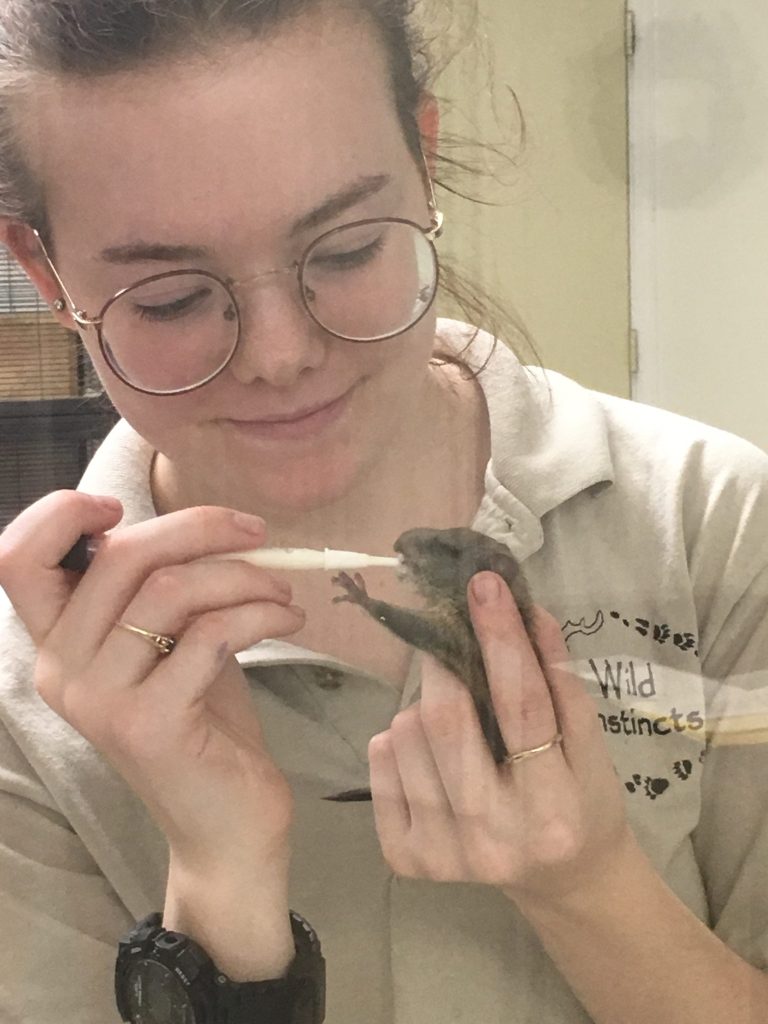
Intern Mary Kate Shaver feeds an orphaned baby squirrel. Mary Kate is studying Veterinary Science and Animal Ecology at Iowa State University. 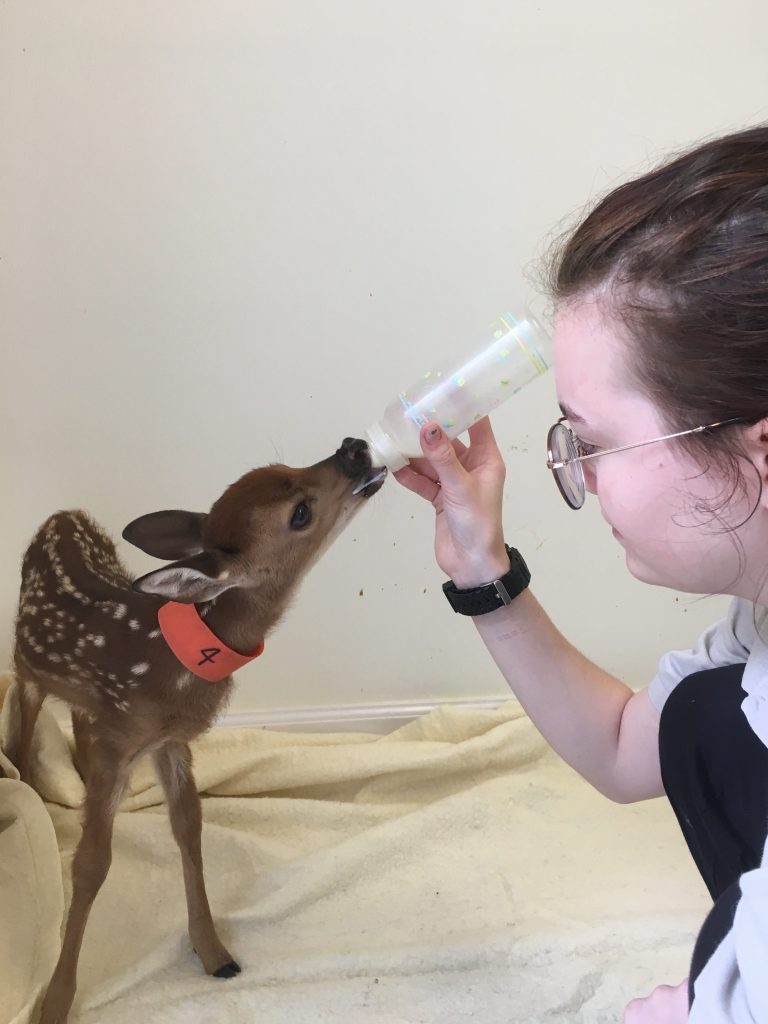
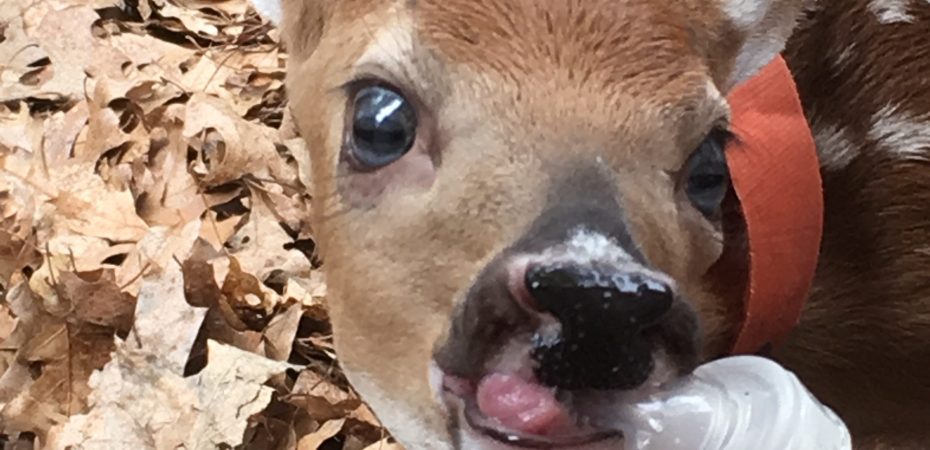
Mary Kate feeds one of the orphaned fawns.

 The Harshaw Herald